Running in the Heat: It's Not Just About Temperature
Why is Heat Dissipation So Important?
Running inevitably generates heat. Every time your muscles contract, they convert chemical energy from nutrients into movement. However, this conversion isn't perfect; only a portion of the energy becomes mechanical work, while the rest is lost as heat. The more intense the effort, the more heat is produced. If the body can't eliminate this heat, its temperature will continue to rise.
And This is Where Sweat Comes In?
Exactly. But here's something that surprises many: sweat itself doesn't cool you down; its evaporation does. When sweat evaporates, it absorbs a significant amount of energy from your skin in the form of latent heat. This process is what allows our bodies to maintain a temperature compatible with performance. If, however, sweat stays on your skin or drips down your body, the cooling effect is much less effective.
So Sweating a Lot Doesn't Necessarily Mean You're Cooling Down Effectively?
That's right.
Many people return home completely drenched and think their body worked perfectly.
In reality, the opposite might have happened. They could have lost a lot of fluids and sodium without adequate cooling. The amount of sweat produced isn't the key metric; it's the amount of sweat that actually manages to evaporate.
This is Where Air Humidity Comes into Play.
Precisely. Air can only hold a certain amount of water vapor. When humidity is low, sweat evaporates easily. When humidity is high, the air is already rich in vapor, and evaporation slows down. The result is that you continue to sweat, but your primary cooling system becomes progressively less effective.
And This is Why Some Days Feel Much Harder Than Others, Even with Lower Temperatures?
Exactly. Consider two scenarios.
One day with 36°C and 25% humidity.
Another day with 30°C and 85% humidity.
Many would unhesitatingly choose the second option. However, it might actually be the more challenging one. In the first case, sweat evaporates easily; in the second, it struggles to evaporate, and the body dissipates less heat.
For a runner, how well they can cool down matters much more than the number displayed on the thermometer.
Is This Where the Famous Wet-Bulb Temperature Comes In?
Yes. The wet-bulb temperature is a parameter that combines temperature and humidity into a single value. Essentially, it tells us how effective cooling through evaporation is. The higher the wet-bulb temperature, the less our body can use sweat to dissipate heat. For this reason, it's a much more useful indicator than simple temperature when assessing thermal stress during a run.
What Happens to the Body When Cooling Becomes Difficult?
The body tries to compensate.
It sends an increasing amount of blood to the skin to aid heat dissipation.
Consequently, the amount of blood available for the muscles decreases.
To maintain adequate blood flow, the heart progressively increases its heart rate. This is why, on very hot and humid days, you often observe a higher heart rate even when running at the same pace. It doesn't necessarily mean you're out of shape; it's a normal physiological response to thermal stress.
There's Another Element Often Underestimated: Wind. How Important Is It?
Much more than people think. Many believe wind cools the body directly. In reality, its main effect is different.
A very thin layer of highly humid air constantly forms near the skin, produced by sweat evaporation.
If that air remains still, it quickly becomes saturated, and evaporation slows down. Wind continuously removes this layer and replaces it with relatively drier air.
This way, it facilitates new sweat evaporation and makes cooling much more efficient. This is why two workouts with the same temperature and humidity can feel completely different simply because one takes place with no wind and the other with a light breeze.
If You Had to Give One Piece of Advice to Runners Training in the Summer, What Would It Be?
Never fixate on the number of degrees.
The right question isn't: 'How hot is it?'
The right question is: 'Will my body really be able to dissipate the heat I will produce during my run?'
Because the answer to that question determines performance, fatigue, and, most importantly, safety.
Fresh materials — Serie A News

Licina Undergoes Successful Wrist Surgery at J Medical After Juventus Match
Adin Licina underwent surgery on his left wrist following an injury during the friendly match between Juventus and Cremonese. JMedical confirmed a fracture, and the young player born in 2007 had a successful reduction procedure. Cremonese announced the operation, performed by Dr. Pego

Spain vs. Czech Republic: Betting Odds and Prediction
Spain continues their strong run after winning the World Cup, demonstrating it with a dominant 4-1 victory over Croatia in the Nations League. This marked their 40th consecutive unbeaten match. Luis de la Fuente's squad had previously secured a 3-2 win against England at Wembley. Their next fixtu

Malagò Denounces Referee Abuse, Sees Hope for Italian Football
Giovanni Malagò, president of the Italian National Olympic Committee (CONI), has spoken out against the violence and intimidation targeting referees. Recent incidents in Campania, Calabria, and Sicily have prompted a strong reaction from Malagò, who stated that such actions are inc
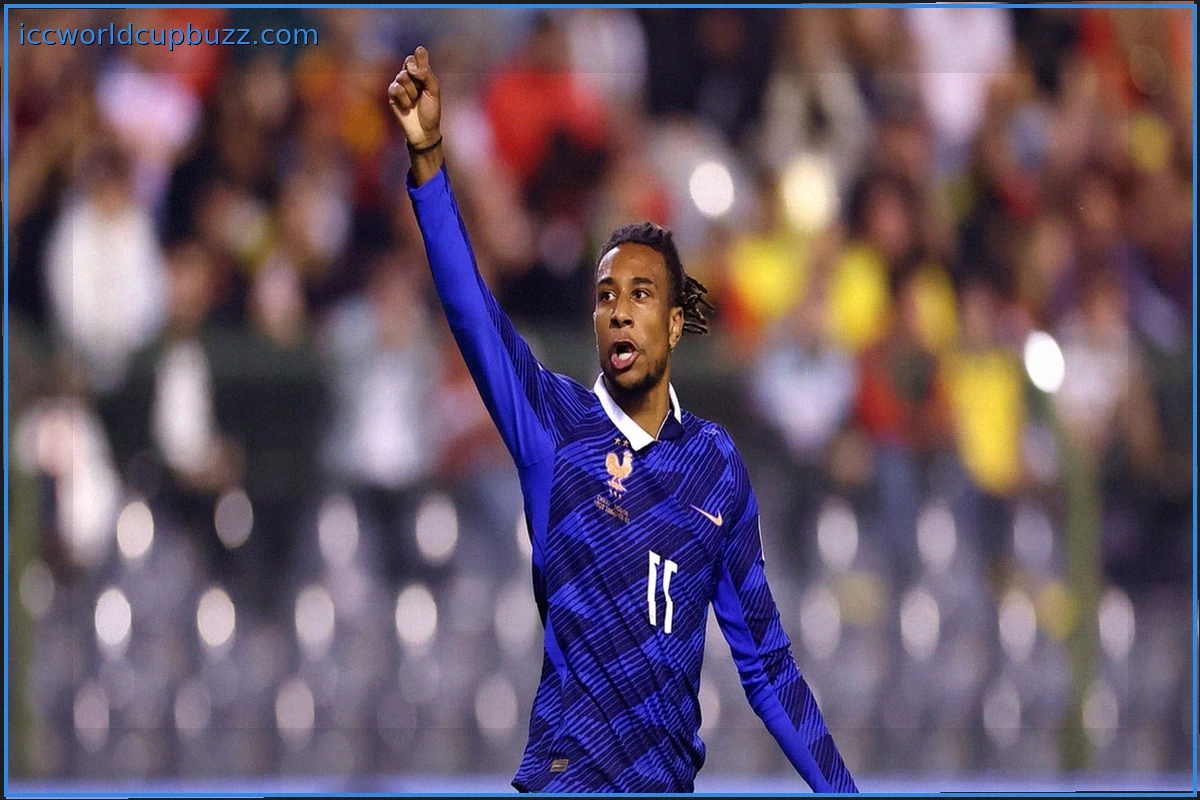
France's Late Win, Bosnia's Joy: Kalulu and Alajbegovic's Performances
Zinedine Zidane's new French squad secured their second win, beating Belgium in stoppage time. Doué and Akliouche created chances in the first half. In the second, Da Cunha, Leapaul, and a lively Doué pressed, but the Belgian keeper Lammens was strong. Olise broke the dea

Olimpia Milano Secures Opening Victory Against Trieste, Burnell Shines
Olimpia Milano celebrated their championship debut with a victory, defeating Trieste 83-79 after a challenging match. Jason Burnell was the standout player, delivering a performance fueled by energy and determination with 21 points and 10 rebounds. Wright also contributed, though h

Arzignano Dominates Carpi 3-0; Renate Falls to Treviso: Updated Girone A Standings
Two draws marked four matches in Serie C's Girone A: Brescia and Dolomiti Bellunesi played to a stalemate, as did Albinoleffe and Alcione Milano. Brescia took the lead through Casasola in the 52nd minute, after a first-half goal was disallowed by VAR. The visitors equalized in the 68th minute